
Having worked in App Store Optimization (ASO) for over six years, I’ve concluded that it desperately needs an evolution. ASO (in general) is a much-needed field for companies seeking to maximize their app, especially online publications or startups wanting to take advantage of a sticky potential user base.
Why the need to evolve? So many companies consider ASO to be just another version of SEO. This is entirely wrong when you get to the nitty-gritty of the subject. ASO is not SEO. And the word “ASO” is another connotation of “oh, you do keyword research…only,” or my favorite, it’s just screenshot optimization.
Before the answer on why ASO is not SEO, here is some background on ASO: In the early days of the app store, the all-mighty algorithm was still young. The platforms (iOS, Google, Amazon, etc.) haven’t utilized to the fullest extent the personalization data points they could use to give users a better quality experience when browsing the app store. This meant they had to rely on scraping metadata that the app developers would provide to describe their apps, pushing out this “visibility” for the app via the metadata through end-users searching or browsing the app stores. Like in the younger days of SEO, playing around with your keywords to boost your visibility and get more users was a viable strategy. In my previous role as marketing for a startup streaming app, playing around with the metadata directly impacted impressions and cascaded down to other KPIs. Playing and analyzing keywords monthly or even weekly sometimes was a crucial part of organic acquisition for a no-name brand.
Why keywords will no longer mean more visibility in the future: When you think about the basic concept of ASO, it seems like what an SEO would do. However, the big two app storefronts are quickly moving towards a more personalized approach. This means our generic keyword game of ASO metadata will no longer be as impactful as if we were to do this in 2016 or 2018. The algorithm looks at user profiles and interests derived from the apps the end-user had downloaded and where they most frequently browse in the app store; these data signals make up a user profile. There are plenty of ways for the algorithm to tell if your profile would best fit into specific apps. This is quite clear to anyone in the app world doing acquisition on Google and iOS (though iOS has some catch-up to do regarding profile acquisition.) With both stores experimenting with their search boxes and the “for you” tab, we can see that full personalization is the trajectory they will eventually head toward.
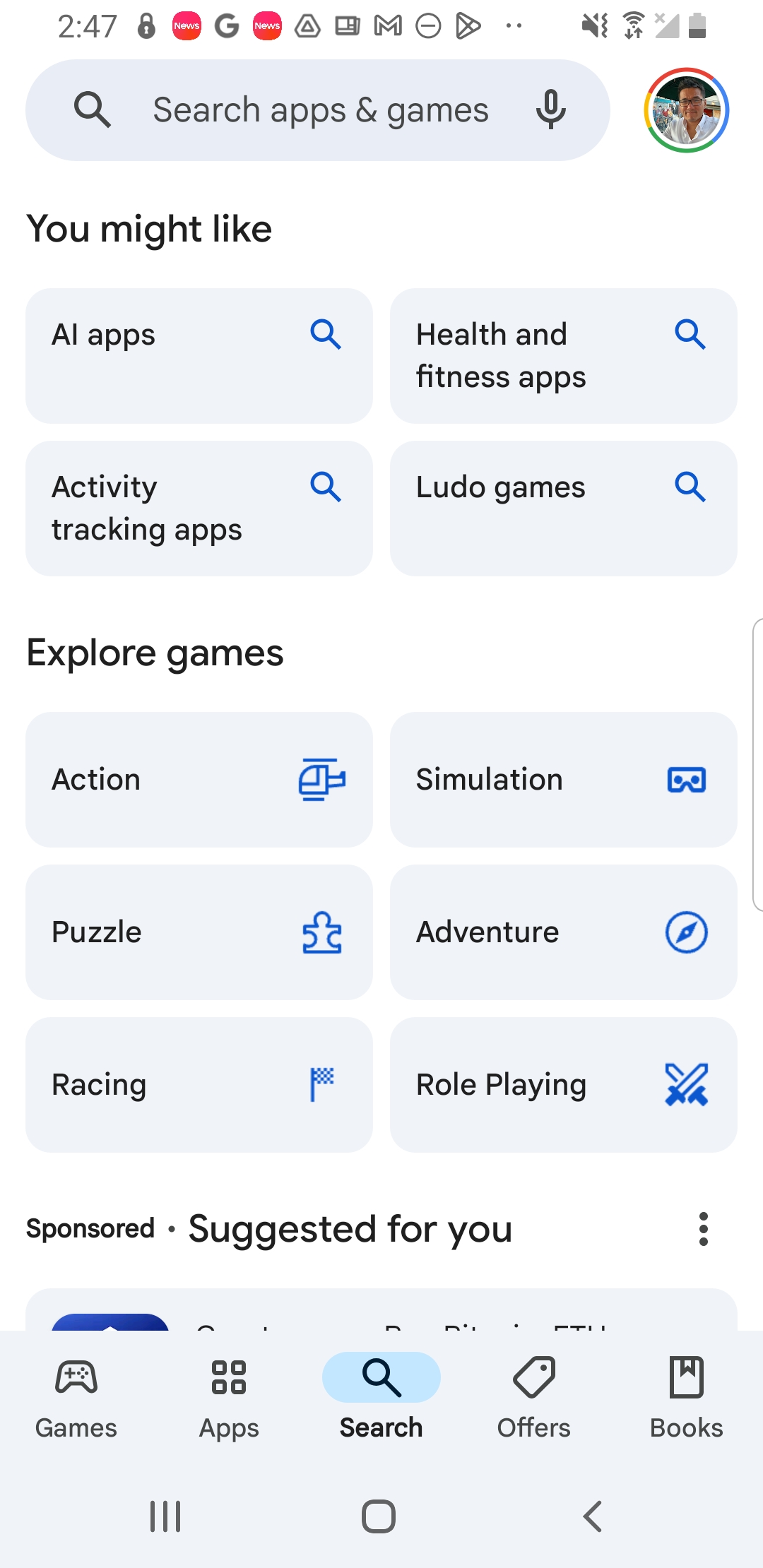
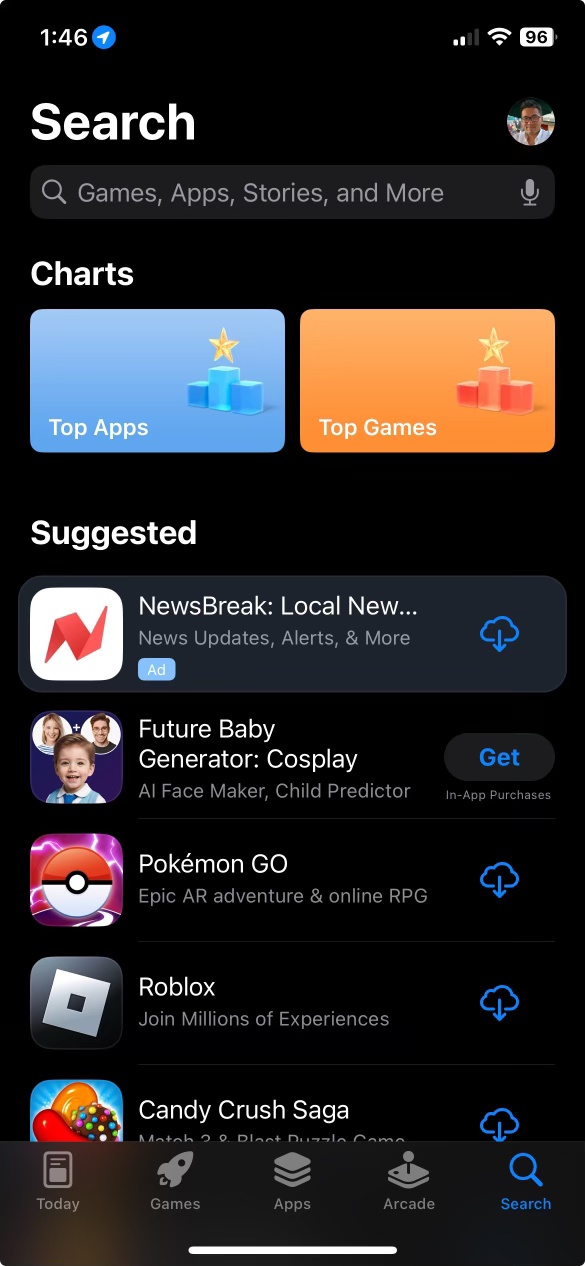
What does full personalization mean? I think this will be less about search overall and more about helping end-users discover something new. The end-users will not be searching for “email” and then sorting out a list of apps via the search box and browsing on a list of 1-100 for the app that looks interesting. They could eventually type “email” into the search box, but what comes up with the top 3 recommendations from the storefront on the email that will best fit the end user.
Similar to the images above, but I think it will be even more specific. Right now, the “suggestions” are still a bit barebones. Still, as time and algorithms progress, I believe these same screens will take a less shotgun approach and more pinpoint needle accuracy based on the end-user’s search intent, meaning what they basically are already doing now, but even more accurate.
Who is already doing this? To illustrate this point, if anyone reading this is familiar with Steam and how that storefront surfaces games to their users, I believe that will be the App Store and Google Play format going forward, with their own flare, of course.
While App and Google Play may not have the same practice as Steam has for many years, my personal prediction is that search acquisition via generic keywords for apps will be dead in a couple of years—give or take five years. This means if you are acquiring a user via search, that will be brand keyword. If a user is browsing the App/Play store, that will more likely be a personal recommendation from the store rather than actual browsing behavior.
AppTweak wrote this blog post about how branded keywords drove nearly 49% of App Store traffic in 2022. This trend is consistent with my experience in enterprise app and startup app marketing. If your app has been in the market for more than three months with some semblance of marketing, brand keywords will eventually take over generic keywords as the driver of the bulk of your acquisition. Why is this, though? Is it user behavior causing this? Or is it Algorithm?
The answer to the two questions above is not straightforward. I think it’s a combination of user behavior and an algorithm.
On the end-user side, as apps become more mainstream, we, as app users, think about companies (brands) as apps now. Therefore, our behavior is shifting towards simply searching a company we’ve come across via their marketing, then going to the app store to see if they have an app. This changes the macro search intent; we’re no longer looking at “email” and shifting through “email” apps; we’re now looking at “email” finding the brand that we’ve decided to download. This intent to download an app specific to a category happened before our fingers hit the App/Play Store icons.
On the App Stores side, both App Store and Google Play, to make sure their storefronts are producing download numbers to empower their ads business, are re-writing their algorithm and stacking UX to keep us in the store longer and give us quality apps so we download in more frequency. The more downloads a user makes, the better the app store’s bottom line. This means surfacing apps that users will be delighted to try rather than having a vast library of thousands of apps to choose from on our own; we now have a librarian (algorithm) to guide this download action.
Combining the two variables above means that ASO’s current functions of keyword research and ” increasing visibility” via keywords are diluted. If users are no longer just browsing the app store via random keywords and the algorithm is pushing for more auto recommendations, keywords will have minimal impact on your long-term app growth and health. Don’t get me wrong, the algorithm still has to ingest something, and that is where the metadata part of the piece will still have time to shine. However, we should no longer worry about metadata or value it as the end-all way to grow your app. ASO needs to evolve into funnel conversion rate optimization specialists.
To me, the future of ASO and of the profession in this area of business will eventually have “App User Acquisition” or “App Growth” or whatever title keyword it may be, will have the theme of “acquisition.” The core of what we will do will no longer focus on visibility via keywords but brand and product visibility. This means we will lose one aspect of the job but gain something even more critical, elevation into full-funnel marketing.
What I say above is not new. Indeed, some of the best app user acquisition machines run by strong “ASO” professionals are already on this train of thought. However, some companies (especially enterprises) may be slow on the uptake, but I do think this will catch on eventually. Apps are no longer just another surface for customers to interact with the business; apps are themselves the business, and your marketing or growth department needs to treat them like that.
Here is a significant point if your company interacts with a customer on multiple device surfaces. Most app and desktop users can be the same person; however, that person behaves significantly differently, whether on a desktop or a mobile device. This means if you are to answer the question, “How can I grow my app?” You have to look at your entire funnel. What are you doing with your brand? How are you marketing your product? And, of course, how are you merchandising your product in the App Stores? If you are to look at ASO in the current job listings and market for this role, only one of the three questions is in scope for the role. I’ve experienced this in an enterprise organization; all three questions are different, but they need to be the same person regarding app growth. Why? Understanding how the App Store operates and the context of the business marketing KPI and overall objective is crucial to marketing an app in this behavioral-changed marketplace.
In the past, the “How can I grow my app?” question was answered with “Oh, just do better ASO.” I don’t think this is the case anymore, or at least it will be in the coming years. The app store world has evolved, and the answer to app growth has gotten more complicated. The profession needs to develop into full-funnel marketing; otherwise, it will see itself become obsolete.
 Nathan Nguyen Portfolio